Asian Games 2026: how to read India's medal tally
A higher total and a higher rank are different achievements. Here is what to watch beyond the headline number.
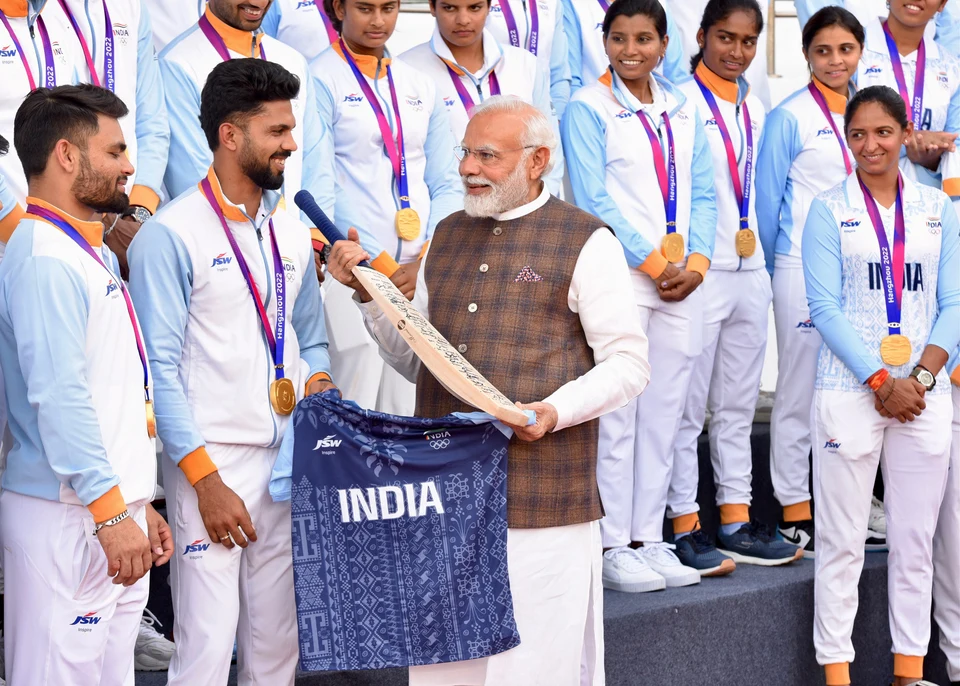

The Asian Games opening ceremony is scheduled for 19 September in Aichi–Nagoya, Japan, with the Games running through 4 October, according to the Japanese Olympic Committee. India held its team send-off in New Delhi on 8 September. For anyone who follows Indian sport mainly during big events, the next fortnight will bring a familiar ritual: checking the medal table and asking whether the country is doing better than last time.
A country can win more medals and still finish below a country with fewer. The total counts podium finishes; the main ranking gives priority to gold. More medals and a higher rank measure different achievements.
India's reference point is Hangzhou, where it finished with 107 medals: 28 gold, 38 silver and 41 bronze. Those results, from the previous Games held in 2023, provide the baseline for comparison.
The table contains two different races
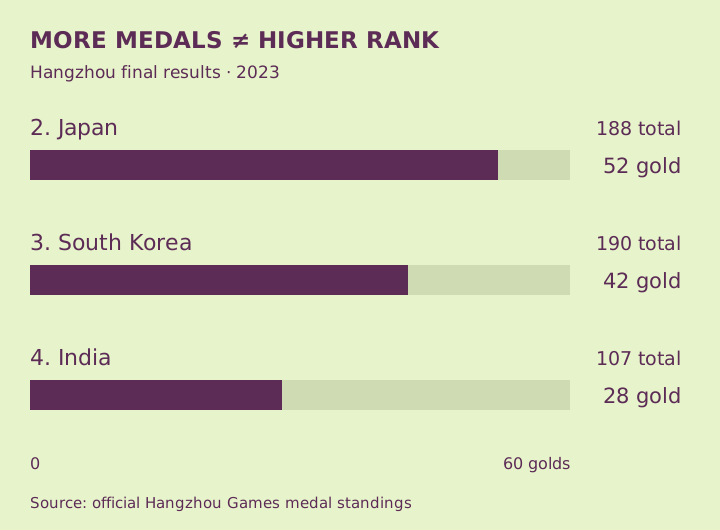
Look at the official Hangzhou standings. Japan finished second with 52 gold medals and 188 medals overall. South Korea finished third with 42 golds and 190 overall. Korea collected two more podium finishes; Japan won ten more events.
The table even includes a separate “Rank by Total” column. In that column the two countries change places. India is fourth under both measures, but that agreement should not obscure the distinction.
Golds tell you how often athletes or teams finished first. The total captures a wider set of podium performances. A bronze can represent a breakthrough in an event where a country previously had little presence, while a gold can mark the successful defence of an established strength.
Trouble starts when the question changes halfway through the comparison. “More medals than last time” and “a higher position in Asia” are different claims. A strong assessment should say which one improved, then look at the other rather than treating it as an inconvenient detail.
A medal total is not a headcount
A team event makes the distinction easy to see. When a team wins, its members can each receive a medal. The country does not add every physical medal to the overall standings as a separate event victory. The result belongs to the team event.
The reverse can also happen: one athlete can contribute results in several events. Counting medals therefore does not tell us how many different people reached the podium. Dividing a medal total by the number of athletes in a delegation is not a clean success rate. The opportunities are different for a player entered in one team tournament and a competitor entered in several individual events.
Suppose a delegation wins one relay and one individual race. That is two winning event results, even though several people stand on podiums.
The practical lesson is to keep three numbers separate: competitors, medal-winning event results and distinct medallists. Each answers a different question about the reach of a sporting programme.
The programme matters as much as the headline
The Asian Games bring together many different competitions. The organising committee's sports and venues list includes athletics and swimming alongside sports such as kabaddi, cricket and esports. A sport is not the same unit as a medal event: it can contain different disciplines, distances, weight categories or team formats.
Cricket offers a concrete example. It returned at Hangzhou after being absent in 2018, and India entered Asian Games cricket for the first time. India therefore had medal opportunities in 2023 that it had not had at the previous edition. Comparing the same events helps identify improvements in performance; examining new entries separately shows where the opportunities expanded.
An Asian Games result also needs context when assessing Olympic prospects. The field, programme and qualification rules differ. A time, distance or performance against comparable opponents gives a firmer basis for that assessment than the medal's colour alone.
Do not turn the first few days into a verdict
A multi-sport Games is a schedule of separate competitions, not one continuous race. Some events finish early, others later. A country can move quickly up the table when several of its stronger events reach their finals on the same day.
So an early lead over a previous edition's running total can have more than one explanation. It might reflect better results. It might also reflect which finals have already taken place. Without comparing the events completed, “ahead of last time on day three” is an incomplete assessment.
Use the organiser's current website for the competition programme and changes. Check the sport-specific fixtures and entries when comparing which finals have already taken place.
A better way to follow India's Games
Start with the result itself: the event, the opponent or field, and the performance. Then place it in context. Was this a repeat podium, a first breakthrough, or an improvement that stopped short of a medal? In measured events, a time or distance can help explain progress that the medal table misses, provided conditions and competition formats are comparable.
Next, check both golds and the overall total. Finally, look at how widely the results are distributed. Several successes from one athlete and successes across several sports are both worth celebrating, but they reveal different kinds of depth.
India's 107 medals in Hangzhou give supporters a memorable number to keep in mind. The more useful comparison at the end of Aichi–Nagoya will include that number, the gold count, the events contested and the performances underneath. Until then, let each result tell its own story before asking the table to tell the whole one.