Why India separates household waste into four streams
Wet, dry, sanitary and special care waste need different routes—and collection must keep them apart.
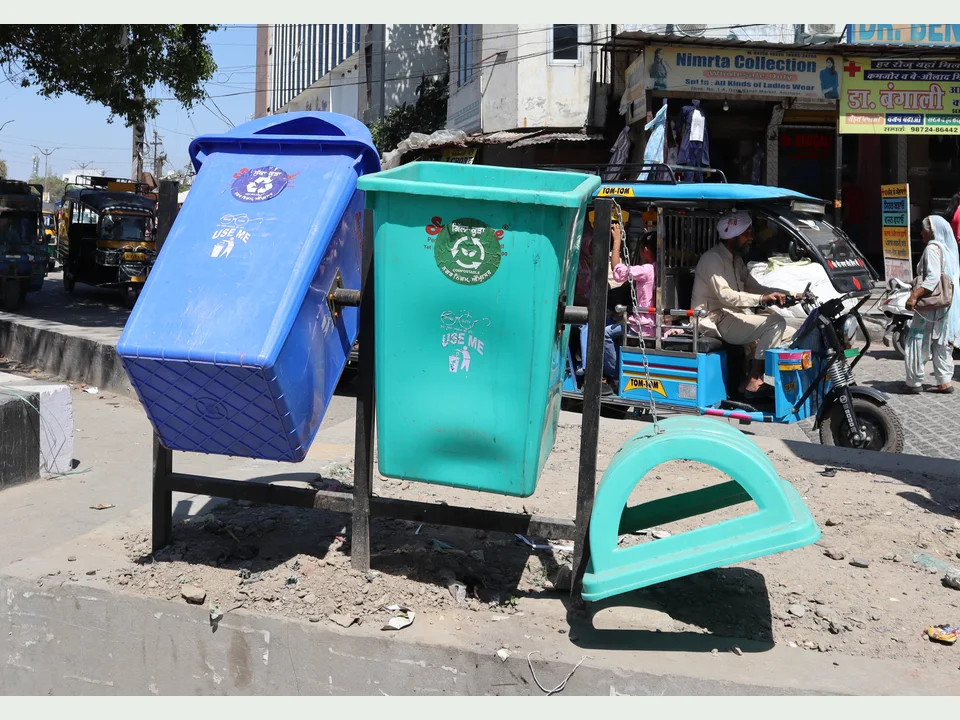

Swachhata Hi Seva began across India on 17 September 2026, with four-way waste segregation among the campaign's priorities, Akashvani reported. Behind the cleanliness drives is a daily question: what should happen to the rubbish leaving your home?
Think of vegetable peels, a cardboard box, a used sanitary pad and an old paint container. All are things you want to discard. But putting them in one bag creates a mixture that somebody else must handle, separate and find a destination for. Their materials and risks call for different routes.
India's Solid Waste Management Rules, 2026 require four streams: wet, dry, sanitary and special care waste. The rules took effect on 1 April; September's campaign is drawing attention to an existing requirement. The useful way to understand the four streams is to follow what can happen after collection.
The earlier 2016 rules required three streams: biodegradable, non-biodegradable and domestic hazardous waste. The 2026 replacement explicitly names sanitary and special care waste alongside wet and dry waste. Households and collectors now need distinct handover arrangements for those four categories, with each kept separate on its way to treatment.
Wet waste can return nutrients or produce biogas
Fruit and vegetable scraps belong to wet waste. The environment ministry's summary of the rules also lists kitchen waste, meat and flowers. These materials can go to composting or bio-methanation facilities.
Composting uses microorganisms and oxygen to break down organic matter into a stable material that can improve soil. It requires managed moisture and airflow. A pile of food scraps left inside a sealed plastic bag is not the same process. The US Environmental Protection Agency's composting guide explains why keeping non-compostable packaging and other contaminants out of the feedstock matters.
Bio-methanation breaks down organic matter to produce methane-rich biogas, which can be captured and used as fuel. Both routes depend on what enters the facility. Separating the vegetable peels from their plastic wrapper at home gives the processor a cleaner starting material.
Dry waste needs sorting before recycling
Paper, plastic, metal and glass enter the dry stream. A material recovery facility, often shortened to MRF, sorts collected material so it can be sent onward to suitable recyclers or processors. A cardboard box and a metal can may travel together at first, but they do not become the same raw material at the end.
“Dry” is a collection category, not a promise that everything in it will be recycled. The material, its condition and the available processing route matter. A container filled with leftover food creates a different sorting problem from an emptied one. A multilayer wrapper is a different product from a single-material bottle.
The EPA's recycling explanation illustrates two useful principles: food contamination affects acceptance, and a plastic's identifying symbol does not establish that the local collection system can recycle it. For the practical handover, use your own local body's instructions on accepted items and preparation.
Vegetable peels and food scraps
Composting or bio-methanation
Paper, plastic, metal and glass
Material recovery facility → sorting → suitable recyclers or processors
Used pads and diapers, securely wrapped
Separate collection → designated treatment route
Paint containers, bulbs and expired medicines
Authorised collection or designated centre → appropriate treatment
Simplified routes under the 2026 rules. Confirm collection arrangements with your local body. Source: Environment ministry and Gazette, rules 5 and 8.
Sanitary and special care waste need their own handover
Used sanitary pads and diapers belong in the sanitary stream. Rule 5 requires them to be securely wrapped, using the manufacturer's pouch or suitable wrapping instructed by the local authority, and placed separately from the other three streams. Keeping them out of loose dry waste also avoids asking a sorter to discover them among paper and packaging.
Special care waste includes items such as paint containers, bulbs, mercury thermometers and expired medicines. Their contents or materials require an appropriate collection and treatment route. The ministry directs these items to authorised agencies or designated collection centres. An item does not become ordinary recycling simply because its outer container is glass, plastic or metal.
The four-stream system also sits alongside separate rules for categories including electronic waste and batteries. Ask the local body or authorised collector where those should be handed over, rather than treating the dry stream as a catch-all for everything that is not food.
The collection vehicle has to preserve the separation
It is reasonable to ask what the effort achieves if everything is tipped into the same load. The Gazette's rule 8 addresses that directly: collection and transport must keep the streams separate until they reach the designated processing facility.
The rule calls for separate wet and dry compartments and arrangements for sanitary and special care waste. It also requires appropriate protective equipment and training for the people doing the collection. Household sorting and the collection service therefore have connected responsibilities.
The national requirement does not establish that every neighbourhood already has a working four-stream service. The useful questions for your municipality, panchayat or housing society are concrete: who collects each stream, when is it collected, and where does it go? If separated bags are being mixed, that is a collection practice to raise with the service provider, not a reason the materials suddenly need the same treatment.
What to look for beyond a cleanliness drive
The lasting test is whether each stream reaches a facility that can use or treat it, week after week. A housing society's shared collection area and contractor are part of that chain. Preserving the separation residents begin at home gives waste workers safer material to handle and processors a better chance to recover something useful.