World Ozone Day: why India's cooling transition is not finished
The ozone layer is recovering. The gases inside our cooling equipment still need attention.

World Ozone Day on 16 September 2026 used the theme: “Global action for a cooler planet”. In its 9 September announcement, UNEP links the occasion to ten years of the Kigali Amendment, the agreement to reduce climate-warming gases used in cooling.
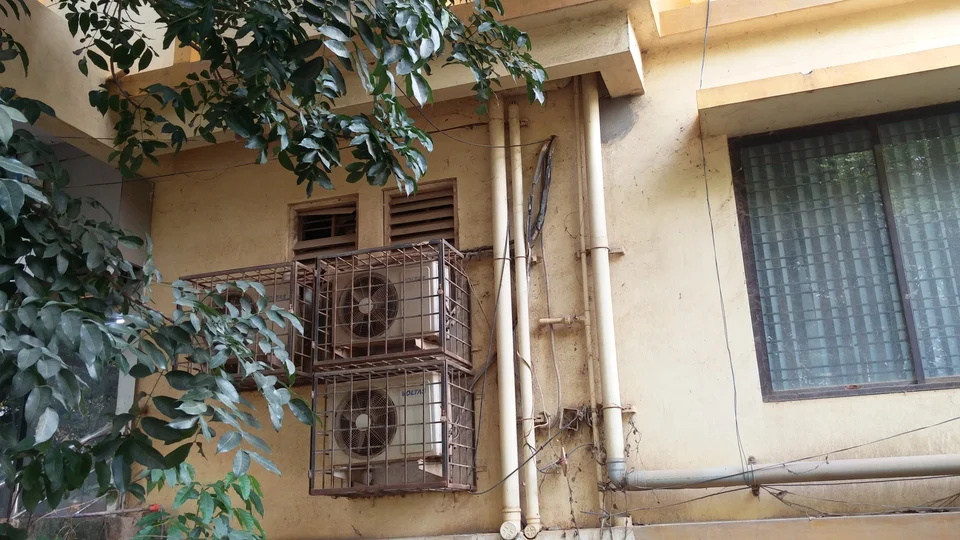
For India, this connects a distant atmospheric problem to familiar machines: the AC outside a bedroom, the refrigerator in a shop and the cold room keeping food from spoiling. Cooling is useful infrastructure. The question is how to provide more of it without making the environmental problem bigger.
The answer starts with a distinction that is easy to miss. A refrigerant can leave the ozone layer alone and still warm the climate. Fixing one problem did not automatically fix the other.
What your AC has to do with the atmosphere
An air conditioner moves heat. A fluid called a refrigerant circulates through the system, absorbing heat indoors and releasing it outdoors. A compressor helps drive the cycle, using electricity. AC manufacturer Carrier's explanation of the cycle identifies these separate jobs: the refrigerant carries heat; the compressor keeps the process going.
That gives cooling two routes to climate emissions. Electricity generation can release greenhouse gases. Refrigerant that escapes from equipment can also contribute to warming, depending on the chemical. A machine can therefore use electricity efficiently yet still contain a refrigerant with a large climate impact if it leaks. Changing the fluid and reducing the power bill address different parts of the problem.
The gas is not meant to be used up like petrol. It circulates inside the equipment. That is why installation, leak prevention, servicing and handling at the end of a machine's life belong in the environmental story alongside the factory that made it.
How the ozone repair created a second challenge
High in the atmosphere, ozone absorbs harmful ultraviolet radiation from the sun. Certain manufactured chemicals release chlorine or bromine that destroy ozone. The “ozone hole” describes severe depletion, not an empty opening through which all sunlight pours. India's Ozone Cell explains this chemistry.
The Montreal Protocol, agreed in 1987, set countries on a path to phase out ozone-depleting chemicals. Refrigeration and air conditioning were among the industries that had to change. Hydrofluorocarbons, or HFCs, became alternatives in many applications because they do not directly deplete ozone. But many HFCs are powerful greenhouse gases.
The UN-backed scientific assessment reported in January 2023 found that nearly 99% of banned ozone-depleting substances had been phased out. It projected recovery to 1980 ozone levels around 2040 across most of the world and 2066 over Antarctica, if current policies remain in place.
Kigali, adopted in 2016, extended the treaty's work to HFCs because of their climate impact. This explains why an ozone observance is now talking about sustainable cooling. The industrial transition needs to preserve the ozone gains while reducing warming from the substitutes.
India's timetable is a phase-down, not an AC ban
India belongs to the group whose HFC production and consumption freeze is scheduled for 1 January 2028, followed by reductions beginning in 2032. The Ozone Cell's current control-measures table sets out the steps below.
Required reduction from the treaty baseline. Each bar uses the same 0–100% scale.
Freeze: 2028. Source: Ozone Cell, Annex F, Article 5 Group 2.
The baseline combines average HFC production or consumption in 2024–2026 with an allowance linked to HCFCs, an older family of refrigerants. It is not simply the amount used in 2026. The treaty measures these quantities in carbon-dioxide equivalents: gases are weighted by their warming potential, rather than counted only by mass. The percentages are cumulative, so the 2047 target means a total reduction of 85% from the baseline.
These obligations concern controlled gases. They do not mean India must have 85% fewer ACs, nor does the 2028 freeze mean households have to stop cooling their homes. Equipment design, the choice of refrigerant and how carefully it is managed determine how much cooling a limited supply of controlled gases can support.
Better cooling needs more than a different gas
Imagine two otherwise similar rooms. One receives strong afternoon sun through an unshaded window; the other has effective external shade. The first AC has more heat to remove.
Reducing heat entering buildings is called passive cooling. It works alongside efficient equipment and better refrigerants, rather than competing with them. UNEP's Global Cooling Watch work treats these as three connected measures: reduce the cooling load, improve energy efficiency and phase down climate-warming refrigerants.
India's Cooling Action Plan, launched in March 2019, takes that broader approach. It covers buildings, cold chains, transport and industry, and brings together cooling demand, refrigerant transition, technology and servicing skills. This matters because cooling food through storage and transport serves a different need from cooling a living room. A national strategy has to accommodate both.
The transition changes the work of the person servicing an AC, too. UNEP's technician-training guidance explains that alternative refrigerants can have different safety properties, including flammability, toxicity or higher operating pressures. Technicians need training for the refrigerant and equipment they handle, alongside skills that prevent leaks during installation and servicing.
Equipment manufacturers and service businesses therefore have connected jobs: supply suitable machines and make sure people can maintain them safely. UNEP's sustainable cooling policy toolkit also covers recovery and destruction of refrigerants. Managing the gas when equipment is repaired or retired helps preserve the climate benefit of choosing it in the first place.
What to watch after World Ozone Day
The useful milestones are practical ones: whether suitable equipment becomes available and affordable, whether servicing skills keep pace, and whether buildings need less energy to stay comfortable. India's 2028 freeze and subsequent reduction steps provide a timetable for the gas transition.
World Ozone Day offers a reason to revisit an environmental success without declaring the job finished. India needs cooling that reaches more people and protects more food. Making that expansion compatible with the atmosphere means asking three questions together: how much heat needs removing, how much electricity the equipment uses, and what happens to the refrigerant inside it.